
My Wet Paint Turns Muddy
You mix a clean color. It looks right on the palette. Then it touches the thick wet paint on the canvas — and turns dull. That doesn’t always mean you mixed the wrong color.
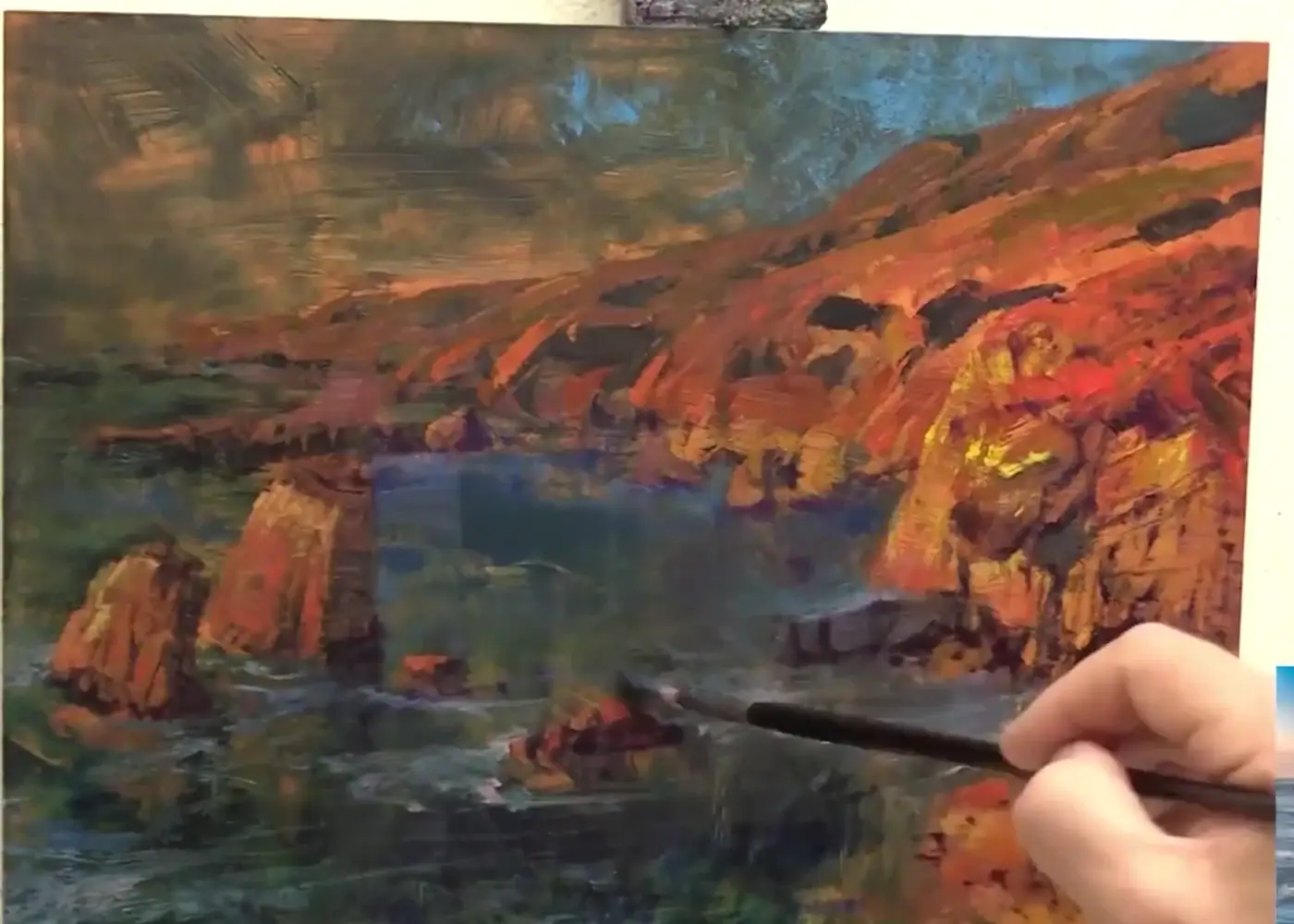
The new stroke gets rubbed into the wet layer underneath instead of being placed on top of it.
Before changing every color on the palette, look at brush load, brush angle, pressure — and how many times you touch the stroke.
Watch this first
Place the stroke once — and leave it
See how a loaded brush, a low angle, light pressure, and one continuous motion help fresh paint sit cleanly over a wet layer instead of being rubbed into it.
Diagnose it
What to look for in your painting
Run through these at the easel. If you answer yes to any of them, the fix is in your handling — not your palette.
Try this at the easel
Ten minutes on a practice panel
Learn the difference between placing paint and rubbing paint — without the pressure of a finished painting.
Clean wet-on-wet color depends on paint load, brush angle, pressure — and stopping while the stroke is still clean.
Paint three or four dark wet squares, about four inches across, on a practice panel.
Load a lighter color generously on both sides of the brush.
Hold the brush low — close to parallel with the surface.
Pull one stroke across a wet square with light pressure, then leave it alone.
On another square, deliberately scrub back and forth so you can compare the difference.
Go deeper
Continue learning inside Master Oil Painting
These three resources deepen the same brushwork idea without repeating the same lesson format.
Already a member? Log in to watch
 Members
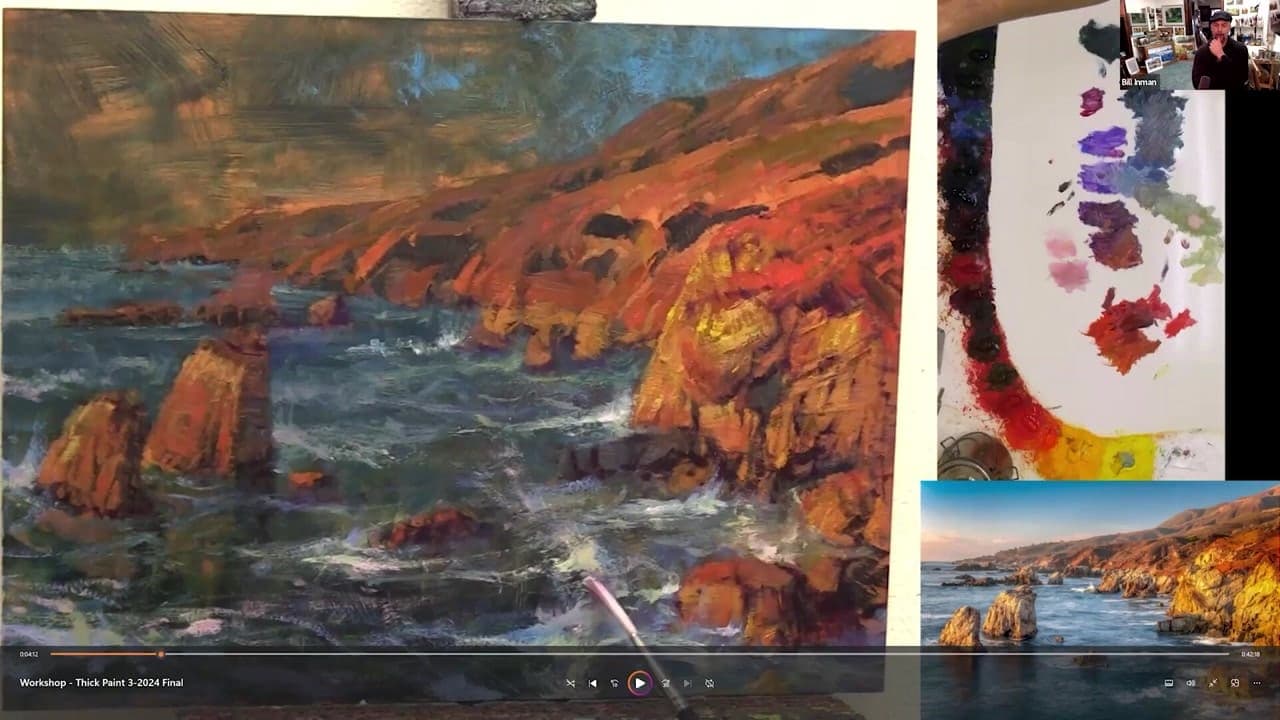
Load the brush like a bulldozer
Follow one continuous coastal-scene and wave demonstration from a single primary source video.
Log in to watch →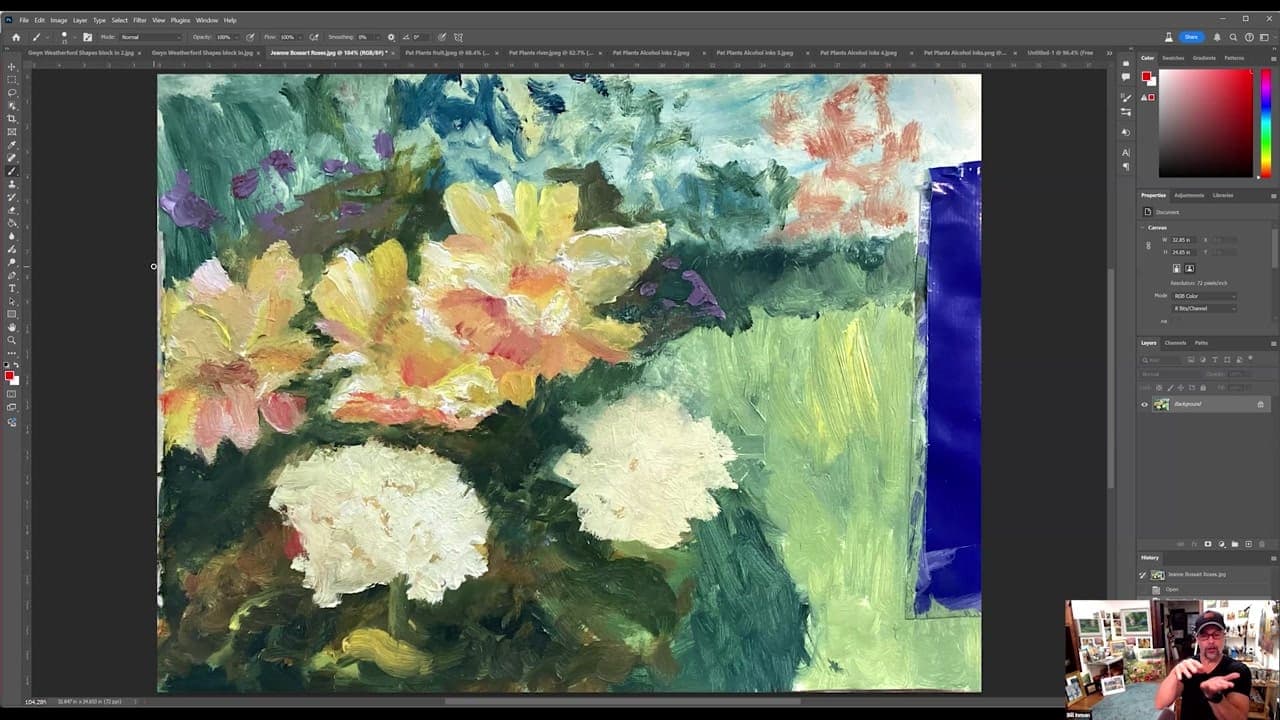 Members
The four-inch square drill
Practice paint load, pressure, and placement in a simple square before applying the stroke to a painting.
Log in to watch →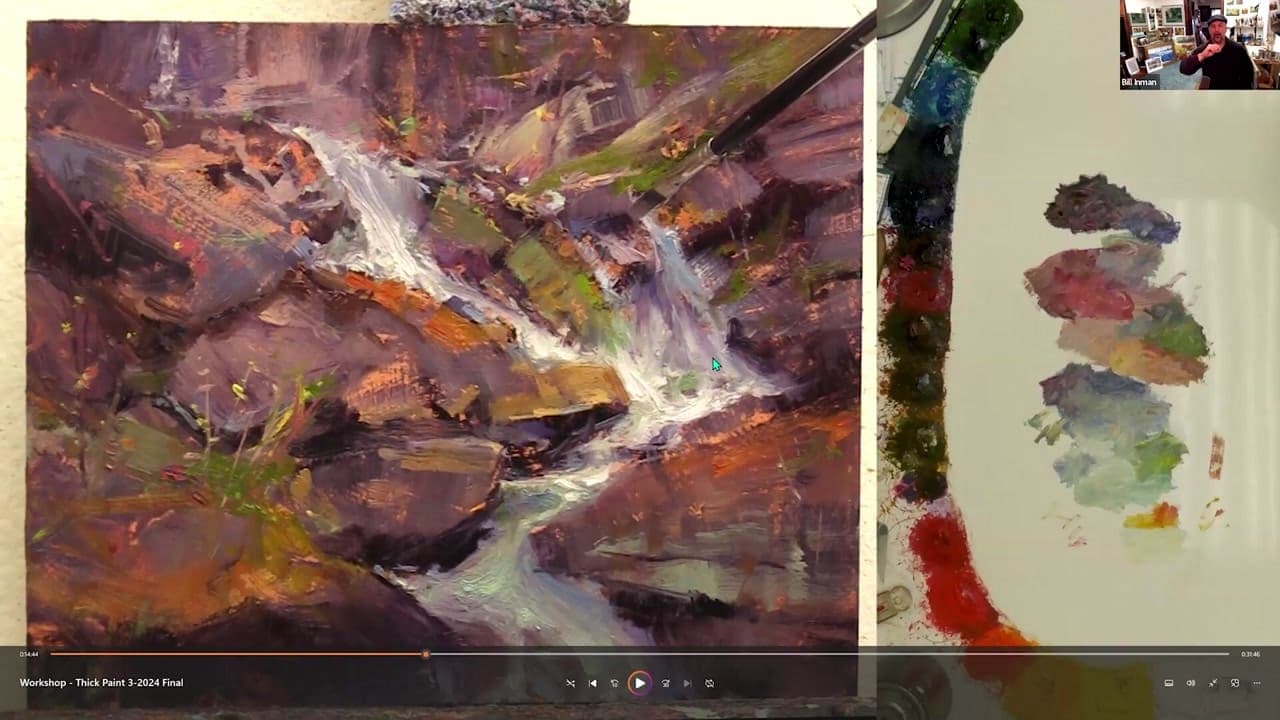 Members
See what repeated strokes pick up
See how repeated passes pick up wet color from underneath and change the clean stroke you originally mixed.
Log in to watch →This page solves one painting problem. The library solves hundreds.
Full training library, critique replays, live-event replays, and a community of painters working through the same problems.